What ~2,000 Homes Tell Us About Air Leakage
For home builders, electrical contractors, and energy raters.
Pressurizing the home and measuring the airtightness (i.e. the blower door test) has become one of the most consequential moments in a new home's life.
Under the prescriptive path of the 2021 IECC R402, homes in climate zones 3 through 8 has to come in at or below 3.0 ACH50 to pass. This pass/fail metric is now the gate in most of the country. If the home fails the test, the builder is forced to organize repairs for the air leaks late in the build, on the clock, with the cleaning crew already scheduled.
Most of the air leaks are caused by envelope penetrations. Every hole drilled through an exterior wall for a wire and every box cut into the air barrier is a place that air can move through. The tighter the code gets, the more each penetration counts.
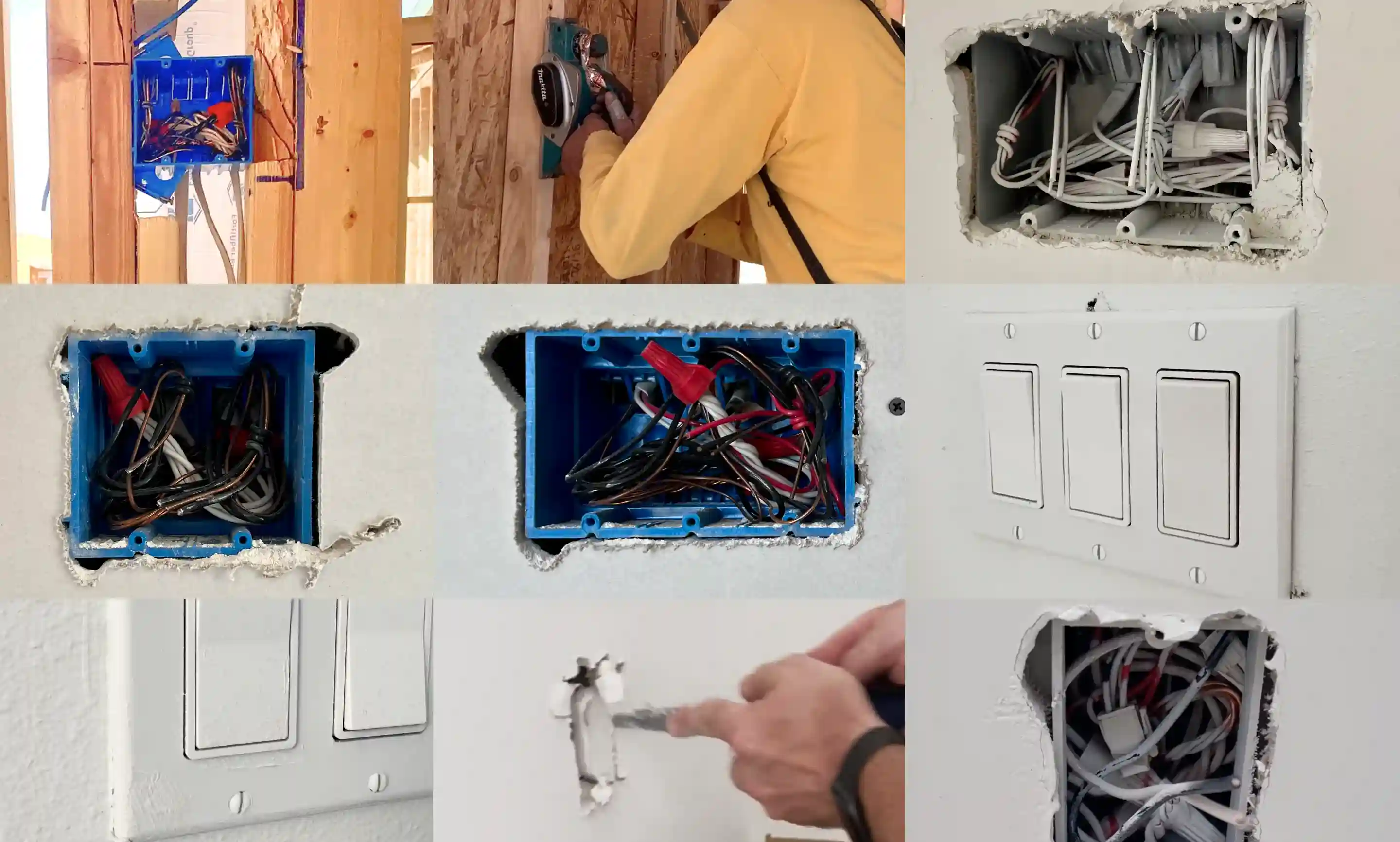
Are Homes Tighter When They Use Fewer Wires and Boxes?
Levven's Switched Right® system is wire-free by design. Levven switches transmit wireless “on” “off” and “dim” signals to power controllers. The switches mount on the surface of a finished wall, so builders can avoid the wire and boxes that would be present in a conventional installation.
In theory, fewer penetrations on the exterior walls and fewer top plate penetrations should yield a tighter air barrier.
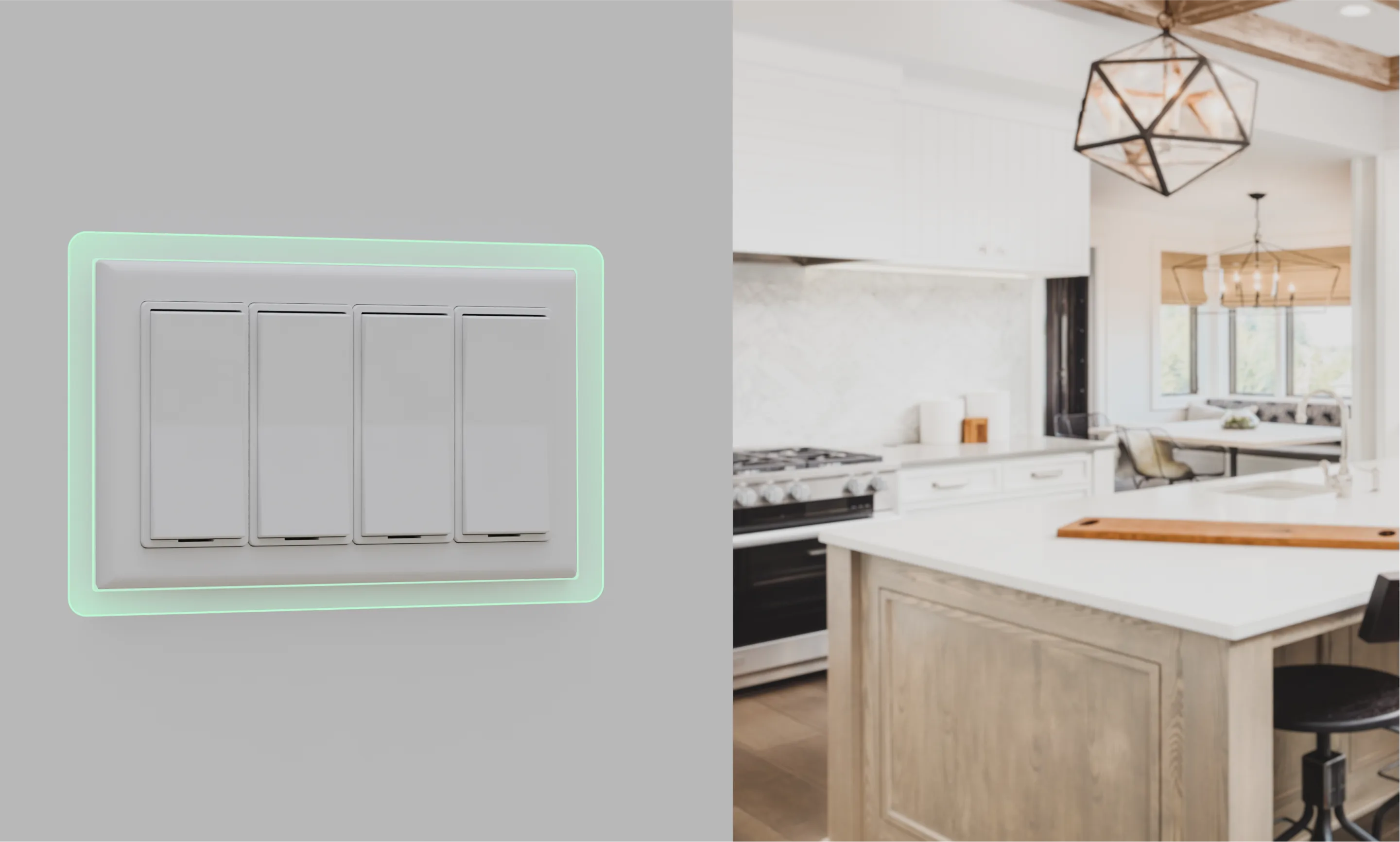
To find out whether that theory shows up in the field, Levven commissioned Ekotrope, a building-energy analytics firm, to look at the numbers independently.
The study drew on a sample of roughly 2,000 rated homes with verified blower-door-tested ACH50 results. Ekotrope matched homes built with Levven products against a control group of comparable homes built with conventional switches and boxes. All homes were single-family detached homes, built in the same market in the same time period, with a similar area and energy-performance range.
What the Test Data Revealed
In every comparison, the Levven cohort came in tighter.

-10%
lower median air leakage, one-story homes
-16%
lower median air leakage, two-story homes
Single-story homes | Median ACH50 result |
Single-story home (Levven) | 1.76 |
Single-story home (conventional wiring) | 1.95 |
Difference with Levven | 0.19 air changes per hour, a 10% improvement |
Two-story homes | Median ACH50 result |
Two-story home (Levven) | 2.09 |
Two-story home (conventional wiring) | 2.50 |
Difference with Levven | 0.41 air changes per hour, a 16% improvement |
Lower values mean fewer air changes, i.e. a tighter envelope with fewer air leaks.
In the testing sample, both single- and two-story homes comfortably cleared the required 3.0 ACH50 result. The difference is the margin. In a world where the code keeps tightening, and the test is pass/fail on the day, a tighter starting point is a room you do not have to fight for at the end.
The Likely Reason: Fewer Holes in the Air Barrier
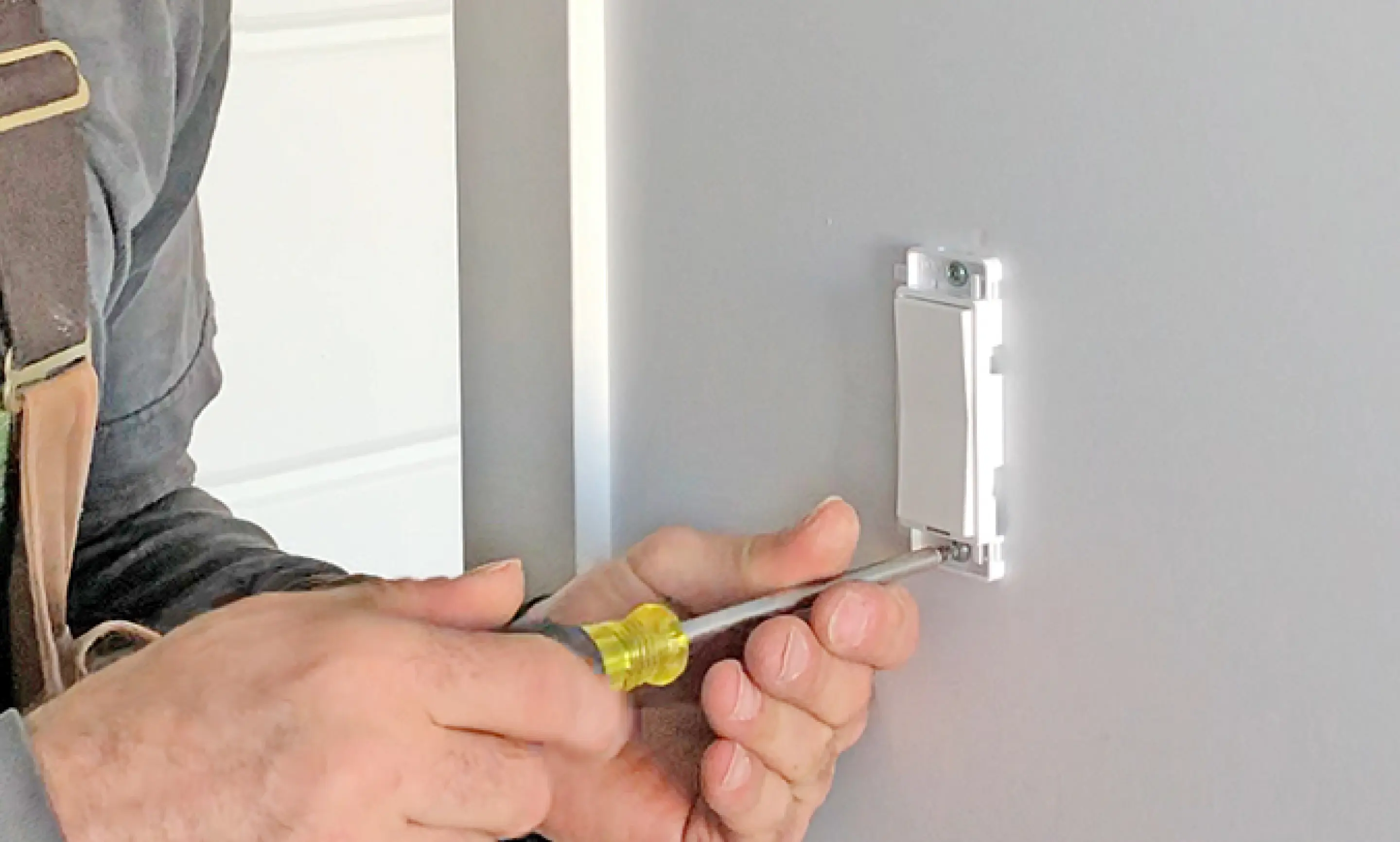
An electrical installation that uses wire-free switches removes a meaningful share of those penetrations before anyone reaches for a tube of sealant. Fewer penetrations is a more continuous air barrier, and a more continuous air barrier is a lower ACH50.
That is the most plausible explanation for what the data shows — and it is the same logic builders and raters already apply when they hunt down leaks one penetration at a time.
Disclaimer: this analysis shows correlation, not causation. It does not prove that installing Levven products will lower any individual home's ACH50, and Ekotrope was clear about that limitation.
What it does show is a consistent, real-world pattern across a large sample of independently rated homes: the homes built with Levven were the tighter ones, every time the data was sliced.
We would rather tell you exactly that than oversell it.
What It Means if You Build or Wire Homes
FEWER wall and plate PENETRATIONS to finish and seal.
- Every box and conductor you do not run through an exterior wall is one less spot that needs to be sealed, and one less thing to fail on test day.
More MARGIN under the code.
- As jurisdictions tighten toward and below 3.0 ACH50, a tighter baseline is cheaper than a late-stage scramble.
ONE LESS VARIABLE on a high-stakes test.
- The blower-door result is increasingly the difference between a certificate of occupancy and a callback. A more continuous envelope is a more predictable one.
Tighter homes are also BETTER HOMES for the people who live in them.
- Lower utility bills, fewer drafts, steadier comfort. But for the people who build and wire them, the practical story is simpler: fewer holes, more margin, a more predictable test.
Home builder COST, EFFICIENCY, AND VALUE advantages.
- Builders who specify Levven wireless electrical controls gain WHOLE-HOME SMART LIGHTING, conserve ONE OR MORE DAYS on their build schedule, CONSERVE 30% of the building wire, and they avoid dozens of leaky envelope penetrations.
The blower door test figures above are drawn from an independent analysis by Ekotrope of approximately 2,000 rated homes with verified ACH50 results.